Oct 10, 2026Buying Guides
CE, FCC, RoHS, UKCA: What the Marks on the Box Actually Mean
CE, FCC, RoHS, UKCA: the marks are not decoration. What each certification actually proves, which ones your market requires, and how to verify the paperwork behind them.
Every accessory box carries a row of small marks: CE, FCC, RoHS, UKCA, sometimes a UL. Buyers copy them into purchase orders, listings and customs paperwork. But ask a room of importers what each one actually proves, and the answers blur fast, which is exactly the problem sourcing advisors have warned about for years. A certificate issued in China, one advisor put it, is not permission to sell in your market. The marks are a language, and this guide is the phrasebook.
CE: The Passport to the European Union
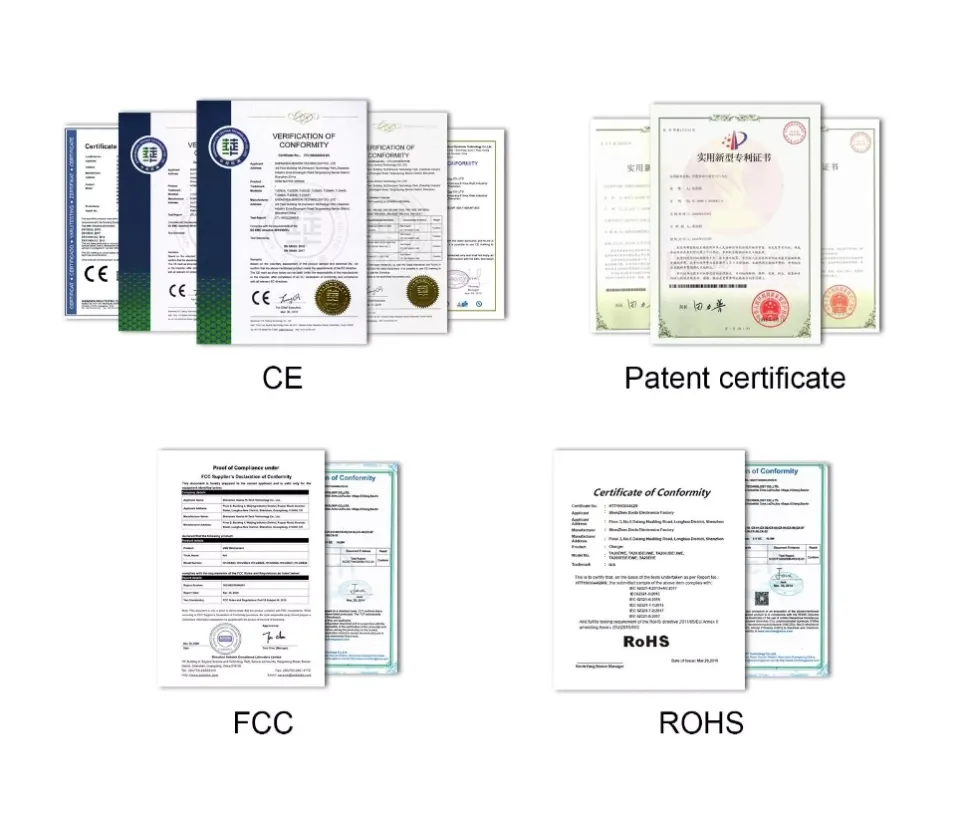
The CE mark on a hub, cable or dock says the manufacturer declares the product meets the applicable European Union directives: electromagnetic compatibility, safety, and for anything with a radio, radio equipment rules. Two facts about CE surprise buyers. First, for accessories like ours, CE is usually a self-declaration backed by the manufacturer's own documentation, not a certificate handed out by an authority: the evidence is the Declaration of Conformity (DoC) and the test reports behind it. Second, CE is what makes the product legal to place on the EU market at all. If a supplier cannot produce the DoC on request, the mark on the box is decoration.
FCC: The United States, in Two Flavors
The FCC mark covers the United States: the product's electromagnetic emissions will not interfere with other equipment. Digital accessories reach compliance one of two ways: Supplier's Declaration of Conformity (SDoC) for most devices, or full FCC Certification with an ID number for products with radios. Same rule as CE applies: the mark is the summary, and the declaration plus test data from an accredited laboratory is the substance. Buyers shipping to the US should ask which route the product took and keep the file with the shipment.
RoHS and REACH: What Is Inside Counts Too
RoHS (Restriction of Hazardous Substances) is the EU rule limiting lead, mercury, cadmium and similar substances in electronics; REACH extends the discipline to a wider chemical list. They are not about how the product performs but about what it is made of, which is why the paperwork is chemistry test data rather than an engineering report. Marketplaces and customs authorities increasingly ask for these by name, and a supplier who tests regularly can produce them in days.
UKCA: The Post-Brexit reality
Goods sold in Great Britain now need the UKCA mark, the United Kingdom's own conformity designation, with its own documentation. It mirrors CE in spirit but is legally separate, which makes it a live trap for sellers who assumed a CE mark would cover the UK forever. Match the marks to the destination market: CE and RoHS for the EU, FCC for the US, UKCA for Great Britain, and the destination's own list for anywhere else.
How to Actually Verify the Paperwork
The discipline that ties this together is one buyers of our guides already know: ask for the documents with the sample, not after the order. A Declaration of Conformity naming the product and model, test reports from a credible laboratory, and a supplier who answers specification questions in writing. If any mark on the box has no document behind it, treat the box as unmarked.
This is standard practice at Mattzon. Our products are CE, FCC, RoHS and REACH certified, and we provide certificate copies and test reports with bulk orders as routine, because a mark that cannot be evidenced is a liability wearing a logo. For certification documentation on any Mattzon product, message Kitty's team on WhatsApp at +86 186 8146 2886.