Product News
MZ127 OTG Adapter Cable: the Tether Reaches the Other Direction, and the Drawer Is Complete
MZ127 finishes the OTG family with the A male to C female tether: 0.5 meter cable, USB 3.2 at 10Gbps, aluminum housing. No more rigid bridges levering legacy ports to death.
MZ127 OTG Adapter Cable: the Tether Reaches the Other Direction, and the Drawer Is Complete
For weeks this catalog has been building the USB transition one bridge at a time, in every direction and every form factor the drawer economy demands. Today the wall is finished. The MZ127 USB-A Male to USB-C Female OTG Adapter with Cable (0.5m) brings the tether treatment to the most common legacy bridge of all: letting USB-C accessories live on USB-A hosts, with the bridge moved half a meter away from the port where it can do no structural harm.
The spec sheet is four lines and none of them waste space. USB-A male into the host, USB-C female facing the accessory, USB 3.2 at the full 10Gbps, a 0.5 meter cable, aluminum housing at the bridge. It is the mirror twin of the MZ096 covered last week, and together the two tethers close out the OTG family with every combination a mixed fleet could ask for.
Why the A-to-C Direction Needed a Tether of Its Own
The USB-A to USB-C bridge exists in plug form in this catalog, in chip-free and chip-equipped versions, because it is the most demanded adapter direction in the market: tower PCs, conference room computers, hotel and car USB-A ports, dash cameras and instrument panels, all of them speak USB-A while the accessory world has moved to USB-C. The plug versions carry that traffic fine for mice, keyboards and drives that stay put.
What the plug could not solve was physics. A rigid adapter hanging off a front-panel USB-A port carries every bump of a knee, every snag of a backpack, straight into a connector whose solder joints were never engineered for side load. And on dense front panels, a rigid body physically blocks the port next to it, which matters on the very machines most likely to need the bridge: older desktops with just two USB-A sockets within reach.
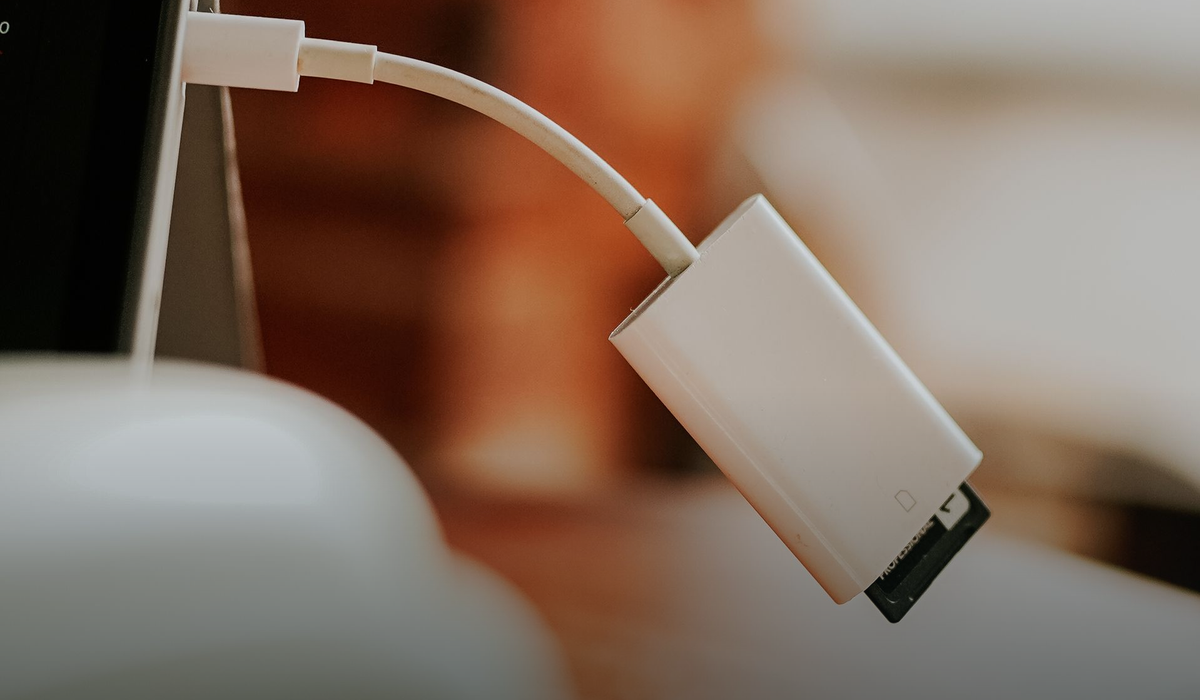
The MZ127 answers with the same move the MZ096 made in the opposite direction. The bridge sits at the end of half a meter of cable, so the flash drive or card reader hangs in clear air instead of levering against the panel. Snags flex the cord, where bending costs nothing, rather than the port, where bending costs a repair. And the neighboring port stays usable, because the only thing occupying the socket is a slim plug and a graceful exit.
Half a Meter, With a Reason
The length repeats the MZ096 logic because the logic survives translation. Half a meter is the shortest run that removes the leverage: long enough to set an accessory flat on the desk beside the tower, short enough to coil into a laptop sleeve or glovebox without becoming cargo. It is also the honest answer to the cable-length trap: tether adapters that reach a full meter add their own weight and clutter to a bridge that should be nearly invisible. On a 10Gbps data bridge, extra cable is not flexibility, it is cost and loss budget with no benefit.
That data rate deserves its own sentence. The MZ127 carries USB 3.2 at the full 10Gbps, the same ceiling as every fast bridge in the family, which means a USB-C portable SSD attached to an aging tower still copies at the speed the drive was built for. The tether form never becomes the bottleneck, so the buyer's decision stays about form factor and price, not performance.
Aluminum, Because Tethers Work Harder
The housing at the bridge is aluminum, and in tether form the material earns its place twice. It sheds the operating heat of a 10Gbps bridge during the long transfers that drives attached to office machines tend to run. And it anchors the strain relief, the single most failure-prone joint on any cable assembly, with metal instead of the plastic collars that crack when a tether is yanked off a front panel at the angle everything gets yanked off a front panel.
The Family Portrait, Now Complete
With the MZ127, the OTG wall holds a deliberate matrix rather than a pile of adapters, and it is worth seeing whole. The USB-C to USB-A direction, for USB-C accessories on USB-C hosts with old USB-A gear, exists as a rigid plug and as a tether. The USB-A to USB-C direction, for USB-C accessories on USB-A hosts, exists as a chip-free plug for simple accessories, a chip-equipped plug in two specification namings for demanding hardware and demanding paperwork, and now this tether. Eight SKUs, each designed against a specific purchasing situation, none redundant.
For a distributor, the finished matrix is a stocking playbook: pick the rows your customers actually live in, plug styles for the impulse drawer, tethers for field kits and crowded panels, chip versions for card readers and drives, and the specification naming your tender language demands. For a retail brand, the matrix is a private-label foundation, because all eight share the same factory, the same quality system and the same OEM terms, with around 89 percent of the catalog in private mold.
Ordering Notes
The MZ127 ships under the standing terms: no minimum order quantity, samples and small batches accepted, lead times from 3 days for stock to 25 days for production. The practical entry test mirrors the one suggested for its mirror twin: a mixed carton of plugs and tethers into the hands of real users, with the return rate doing the scoring. The USB-A drawer is not emptying, but as of this week every way it connects to the USB-C world has a designed answer on the line sheet.