Industry News
The KVM Dock Merges Two Boxes Into One: the Premium Tier Desk Hardware Just Unlocked
AV Access launched an 11-in-1 KVM dock with 8K 60Hz, per Gizmochina. The fusion trend explained: why one desk wants two computers, and the feature ladder for factories.
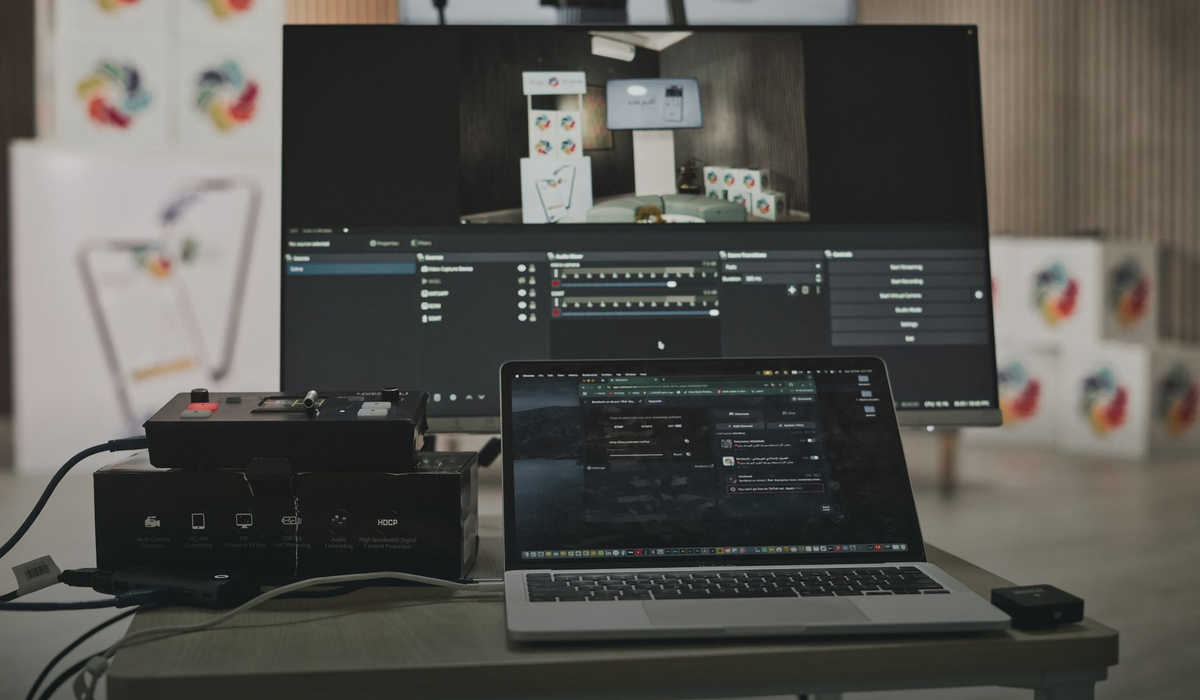
The desk hardware market has spent three years splitting into specialists: docks that connect everything, KVM switches that toggle between computers, hubs that add ports. This week the specialists started merging back. AV Access launched the iDock B12, an 11-in-1 KVM docking station with 8K 60Hz output that folds the KVM switch and the USB-C dock into a single chassis for people running two computers at one desk (source: Gizmochina, November 22, 2026). The launch is one data point, but the trend behind it is one of the strongest in desk hardware, and it draws a clear map of where the premium tier of the category is going.
Why one desk wants two computers, and one box
The demand comes from how people actually work now. A work laptop and a personal machine share one desk, and both deserve the good monitor, the good keyboard and the good network. Without consolidation, that worker owns two of everything and performs a cable choreography routine several times a day. With a KVM dock, one press moves the entire desk, displays, keyboard, mouse and peripherals, between the two machines while both stay connected.
The value proposition is time and space: no cable swapping, no duplicate peripherals, no second monitor arm. The KVM dock is the product form of the sentence every hybrid worker says at least once a week: I do not want to plug things in and out anymore. As hybrid work hardened from a pandemic measure into a permanent structure, the two computer desk moved from exotic to ordinary, and the fusion product followed the users.
What the launch says about the feature ladder
The B12's specification shows how far the merged category has climbed. Eleven functions in one chassis, dual display output at 8K 60Hz, KVM switching between two hosts. Each of those was a standalone product tier not long ago: an 8K dock was a premium statement, an 11-in-1 port count was a catalog headline, and KVM switching lived in its own product family entirely. The fusion product stacks all three, which is what the top of a feature ladder looks like when the market has finished inventing the rungs.
For dock manufacturers, the reporting draws the ladder explicitly. The base tier is port expansion, the middle tier adds power delivery and display output at higher resolutions, and the next rung is KVM intelligence, the switching silicon and firmware that let one chassis serve two hosts. Adding that rung is real engineering, and the premium it unlocks is real margin, which is why the trend line of dock launches now includes KVM as a headline feature rather than a niche option.
The buyer's lens on the fusion tier
For buyers, the fusion product changes the checklist in one important way. When KVM lives inside the dock, the dock is no longer chosen for its ports alone; the switching behavior becomes part of the specification. The questions that matter: how the switch moves displays between hosts, whether the peripherals follow the video or need their own toggle, what happens to connected drives during a switch, and how the unit handles the power negotiation of two different laptops. A fusion product answers all of these in one firmware, while the two box alternative answers them across two manuals.
That is also why the fusion tier commands its premium: it is selling integration testing, not just ports. Buyers who run one desk on two machines should evaluate the switching experience with their actual machines and displays, on a sample, before standardizing the unit across a fleet.
The audience for the tier is wider than the enthusiasts who pioneered it. Financial desks run a work machine beside a personal one. Developers keep a test bench beside the daily driver. Traders, editors, streamers and anyone whose hobby became a second workstation all live the two computer life. Each of those desks was previously solved with two docks or a dock plus a standalone KVM, which is precisely the inefficiency a fusion product sells against.
What it means for the accessory trade
The fusion trend does not eliminate the singles; it reorganizes the catalog around them. The premium tier belongs to the KVM dock. Beneath it, the standalone KVM switch remains the answer for desks whose docking is already solved, and the plain dock remains the answer for single machine desks. The catalog that explains these tiers clearly sells upward instead of sideways: the customer who understands what the fusion adds is the customer who knows why it costs more.
Mattzon sits on both rungs of this ladder, manufacturing KVM switches and docking station lines for OEM and ODM programs, with 89 percent of products on private tooling. Samples and small trial batches are accepted with no minimum order quantity, and production runs are scheduled in 3 to 25 days from our factory in Shenzhen, with CE, FCC and RoHS documentation for destination markets.
The desk consolidated its cables, then its computers, and now its boxes. Send us the desk your customers are building, and we will tell you which tier it actually needs, because the most expensive dock is the one bought one tier above the problem.
Source: Gizmochina, November 22, 2026, gizmochina.com