Buying Guides
Test Your Cables Before They Test Your Patience: a Buyer Field Guide
Cables fail quietly first. A ten dollar power meter, a timed transfer and two minutes of wiggling show what a cable delivers. Four failure signatures and what each one means.
Test Your Cables Before They Test Your Patience: a Buyer's Field Guide
Most cables fail quietly. They charge a little slower than yesterday, negotiate a lower video tier, or drop a connection once an afternoon, and the owner blames the phone, the laptop, the hub, everything except the $8 braided wire in the middle. By the time a cable announces its failure outright, it has usually been degrading a desk for weeks.
The good news: cable testing has become a household skill. Between a cheap USB power meter, a laptop's own diagnostics and a few structured checks, anyone can verify what a cable actually delivers in under ten minutes. For wholesale buyers the same discipline scales up: a sample box tested before the purchase order is the cheapest insurance in the accessories trade. This guide walks through the tests, what each one catches, and the failure signatures that tell you a cable is lying about its specification.
Why Cables Fail in Ways the Eye Cannot See
A USB-C cable is a bundle of separately shielded conductors, each with its own job: high-speed data pairs, a charging pair, a sideband channel for negotiations, and the small but critical eMarker chip in actively marked cables. Different conductors fail differently, which is why one cable can charge perfectly and drop data, or transfer files beautifully and refuse to run a monitor.
Wear concentrates at two points: the strain relief where the cable meets the plug, and the connector contacts that mate thousands of times. Internal conductor fatigue from repeated tight coiling shows up as intermittent faults that vanish when the cable lies flat, the most misleading failure mode of all because a test on a tidy desk passes a cable that fails in a pocket.
Cheap or counterfeit cables add a darker category: missing or wrong-value resistors, missing eMarker chips in cables that claim 100W or 240W, and data pairs swapped for copper fill. These are the cables that start fires in charging circuits, and no amount of external braiding hides them.
Test One: the Charging Meter, Ten Dollars Well Spent
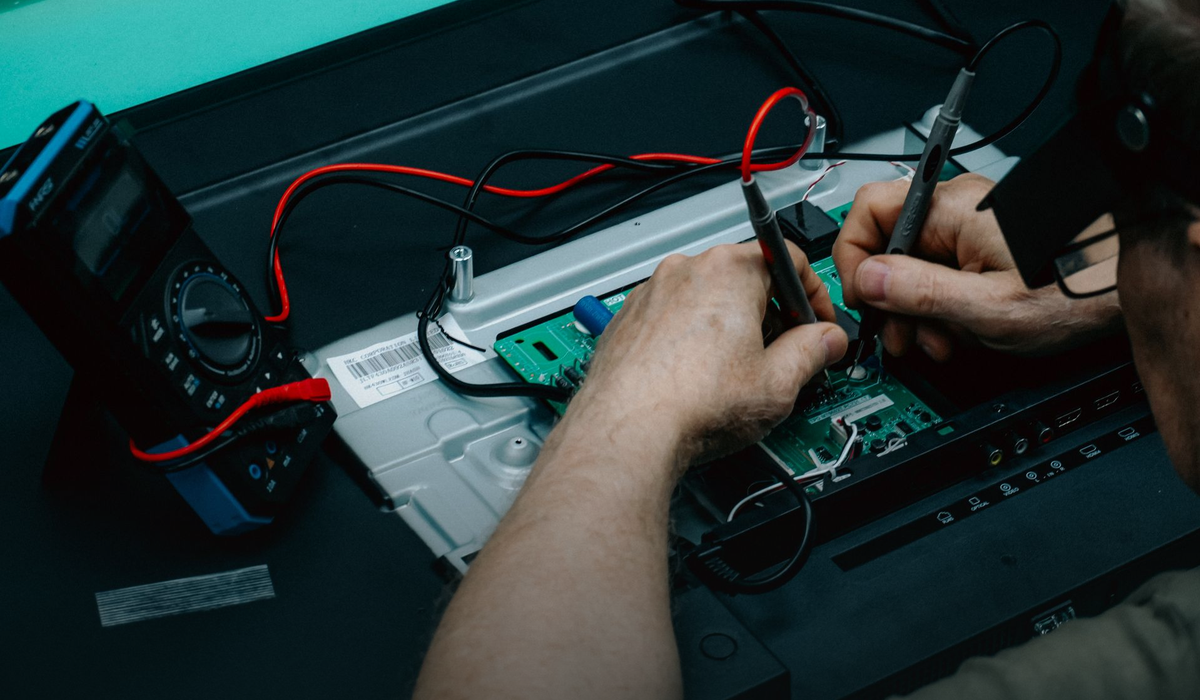
A USB power meter plugs between the charger and the cable and displays volts, amps and accumulated watt-hours. It is the single most useful cable-testing tool a household or a QC bench can own.
Run the test with a phone or laptop that reports its own charge level. Plug the meter inline and watch the wattage during the first five minutes of charging. Then swap in a known-good reference cable and repeat. If the suspect cable delivers meaningfully fewer watts than the reference on the same charger and device, its charging conductors or its eMarker are under-delivering. A cable sold as 100W that negotiates 60W is not a bargain; it is a spec violation with a braid on it.
Repeat the test with the cable loosely coiled and then coiled tight around your fist. A wattage drop in the tight configuration is the signature of strained conductors: the cable works while straight and cheats while bent, exactly the state it lives in on a real desk.
Test Two: Data Speed, Verified Without Fancy Gear
Charging is half the story. For data, copy a fixed large file, 20GB or more, from a fast drive through the cable, and time it against the same transfer through a known reference cable rated for the same tier. The arithmetic is simple: a genuine 10Gbps cable moves 20GB in roughly half a minute of sustained transfer; a cable secretly wired for USB 2.0 takes many times longer, and no packaging claim changes that outcome.
For video, connect a monitor through the cable and force the display settings to the tier the cable claims. A cable that cannot hold 4K at 60Hz will negotiate down to a lower mode or flicker; either result is a verdict. Note the exact modes that held and the ones that failed, because those notes become the return justification or the supplier conversation.
Test Three: the Wiggle and the Bend
Intermittent faults need to be provoked. Connect the cable for charging or data, watch the live meter reading or the transfer, and then work the cable near both plug ends: flex it gently, rotate each plug a few degrees in its socket, and tap the housing lightly. A healthy cable shows no change. A cable with cracked conductors or worn contacts stutters, drops the meter reading, or disconnects the transfer. Two minutes of provocation finds faults that a week of ordinary use would eventually find anyway.
Finish with the bend test from the jacket world: coil the cable around a marker pen, hold, release, and look for a set or kink near the strain relief. Then flex the first two centimeters behind each plug and feel for lumps under the braid, which are crushed conductors waiting to fail.
Reading the Results Like a Buyer
Run the three tests on a suspect cable and you will get one of four signatures, each with its own meaning. Full pass means the cable meets spec; retire it to the drawer and test it again after a year of service. Charging pass with data fail means the data pairs are damaged or fake, common in no-name cables; fine for charging, never for drives or monitors. Data pass with charging shortfall points to a missing or wrong eMarker or thin power conductors; do not use it for laptop charging. Intermittent stutters under movement mean mechanical fatigue, and the cable should leave service before it takes a device down with it.
For wholesale buyers, run the same battery on a sample box of ten units rather than one, and record the results per unit. The spread tells you what a production batch will look like better than any single golden sample, because cable assembly tolerances live in the spread.
When the Test Fails: the Supplier Conversation
A failed cable is information if you bought it from a supplier who stands behind the specification. Bring the meter readings and transfer timings, not adjectives: a 100W-rated unit negotiating 58W against a reference is a claim any factory can reproduce on its own bench. Certified manufacturers respond to that data with a batch investigation, because RoHS, CE and USB-IF compliance obligations make a failing certified cable their problem, not yours. Vendors who disappear at that moment have told you something more valuable than any certificate: the difference between a supplier and a seller.
The factory behind this site publishes its cable specifications at the conductor level, welcomes sample batches under no minimum order terms, and expects to see customer test data, because a buyer who tests is a buyer whose reorders arrive without surprises. Test your cables. The ten minutes at the desk is the cheapest quality department you will ever run.